“Do not bother, she will be a dropout.”

The fourth-grade teacher said to my father about his dyslexic daughter 30 years ago.
Läs originaltexten på Myndigheten för Tillgängliga Mediers (MTM) Antologi - Att läsa på sina villkor

Hello, my name is Vasiliki, people call me Vaso. I am a dyslexic academic (with Attention Deficit Disorder, as well as anxiety and depression disorder), I am a Marie Skłodowska-Curie (MSC) alumna, as I did my doctoral studies in an MSC Actions-funded Doctoral network – one of the most prestigious doctoral training networks in Europe. I serve as a member of the Swedish Agency for Accessible Media - Research Council and currently work as a senior lecturer with the title of associate professor at the University of Gothenburg, often acting as a visiting lecturer at a couple of universities. My background is in Human-Computer Interaction (HCI), and I work with digital health and inclusion. Simply said, I work with different actors to design easy-to-use digital technology for health and wellness services and products (from apps that motivate a person to exercise often to systems that are used between patients and healthcare professionals). My focus is on ways to include people with chronic conditions and disabilities in the design process of digital health, not as subjects of research but as decision-makers.
Did I aspire to become any of this? No. I was not a person with concrete long-term targets and strategies on how to achieve them. I just took one step at a time to find a job, find meaning in activities I was involved in, and have as happy a life as possible. It is not always easy; I would say that it is tiring to want to do stuff and to have to find a different way to do it because the traditional way does not work for you. However, I did learn some things I can share with you.

Diagnosis is a double-edged sword.
Even though diagnosis can open doors to self-understanding and support (e.g., access to assistive technology, extended time, and oral examination), it also opens a window to stereotypes, misconceptions, and prejudices. Before my diagnosis, my parents, as well as the fourth-grade teacher I mentioned in the title, thought I was just bad at school, that I did not focus, and was just lazy. How could I have been lazy? I was at school from eight in the morning to two in the afternoon, and I studied from four in the afternoon to one in the morning, before doing it all over again the next day. When I was nine, my parents took me to an expert, who looked at me and said: “You have dyslexia. Do you know what that means? You are very clever.” Back then, the typical example of a person with dyslexia was Einstein.
Together with the label, a list of my strengths and weaknesses emerged, e.g., Dyslexics are good at math and tinkering, but struggle with languages and memorization. That was kind of true, as I enjoyed math more than language. However, I ended up getting stressed. What if my level of dyslexia was so high that I was bad at languages, but not high enough to be Einstein-level good at math? Describing Dyslexia as a gift made me anxious, and it undermined all my efforts and struggles, especially in reading, which was cognitively exhausting for me. I perceived the list of things I was good or bad at as things I could or could not do. For example, as a dyslexic, I am bad at languages, which I interpreted as not being able to study psychology, linguistics, philosophy, and all studies connected with what was, in Greece, called the theoretical fields, i.e., fields that do not include ‘hard sciences’. I disliked studying, as my experience with school had been unpleasant, so I could not study forensics, like I wanted to at first, or any type of ‘hard science’, because these fields require you to study a lot and potentially to study in schools for many years. These were two out of the three directions I could choose in high school. So, what was left? The technical or applied direction, the direction I was supposed to be good at (tinkering). I checked where the future lay and chose software engineering. Now I wonder, is this a clever way to pick your future profession, to base it on what a diagnosis and people tell you what you are good or bad at?
When I got the diagnosis, accommodation was given to me throughout my school years. I had extended time for written exams, or I could have oral examinations instead of written ones, for example. This made my diagnosis obvious to others at school, with some people telling me that I had passed the matriculation exams not because I had studied, but because the examiners had pitied me during the oral examination. Of course, this was not true. People without dyslexia who, for one reason or another, had to take the oral exam as well (one had a broken arm and could not write), did not share this view and found the oral form of examination more challenging.
Eventually, the diagnosis helped me understand myself. As a child, it was hard to perceive how dyslexia impacted me or how others functioned without dyslexia. I was reading, studying, and learning in the way I did since day one; I did not know how it was to be without dyslexia. I started digging into the subject a bit more when I was 27 years old, the year I left Greece for Sweden. I realized then that dyslexia was not a gift; it was an attribute. One could describe it as a characteristic, or a feature of mine, and this feature was perceived differently based on the social context. A more relatable example is blue eyes. In some cultures, blue eyes are considered conventionally beautiful; however, it does not necessarily mean that brown eyes are not beautiful. It is the same with dyslexia: someone with dyslexia is not necessarily more or less clever than others. They are just different.
Environments can enable.

Recently, a friend told me that I could not progress much alone; a supportive environment was needed. Regardless of the comment being unrelated to dyslexia, somehow it resonated with the progress in my life. It took me almost twice as long to finish the Greek university. It consisted mainly of lectures and traditional closed-book exams. In addition, there was no legal framework for accommodating dyslexic students in higher education in Greece until after I graduated. Therefore, no one had any obligation to accommodate my needs, and I am unsure if anyone would even know how, had they been able to.
I moved to Sweden for my master's studies, which were pretty theoretical – lots of reading, no math. I was given an A4 page by the university listing all the support I could get, including Legimus. I had no idea what to pick because most of them were new to me. Therefore, I picked the options I already knew, extended time, and oral examination. In two years, I used the extended time only twice. I had only one course requiring me to take traditional exams, and one course where they were asking for a lot of individual work as a home exam. The rest of the examinations were presentations, reflections on our own progress and learning, discussions, essays, and group work. All of those seemed to be compatible with me because I graduated on time and with good grades.
During my doctoral training, I had the freedom to pick courses with an examination format that suited me. My traineeship was impacted by two more factors. First, as mentioned, my doctoral training was funded by the prestigious MSC Actions, which gave me access to a plentiful budget and a wide network. Second, my supervisors were experienced, flexible, and accommodating, meaning that they were confident enough to let me loose, let me experiment, and learn, regardless of whether a PhD student was supposed to do what I was doing. This gave me the freedom to find my own way of learning and forge my own path through my doctoral training, and to succeed in areas where a PhD student was not expected to succeed.
These changes in my environment show quantifiable results. It took me 7 years instead of four to finish my undergraduate degree, but it only took me 5,5 years altogether to finish both my master’s and PhD degrees. I am aware that not everyone can or wants to move countries to find an environment with the proper conditions for them to grow. I have been in those situations too, where people thought that I was trying to be cleverer (than them), or that I was cheating because I was using the support offered to me as a person with dyslexia. What do you do then? You stop listening to them and try to create your own microclimate, find the people that facilitate your growth, create your own network, and explore tools that may support you.
Technology can be a supportive tool.
After I left Greece, I began using the computer in a different way from programming. Reading and writing were done through the computer. I also changed languages, from Greek to English, and technology is always better in English. I realized that I could convert the PDFs given by the library or lecturers into audio files, and later, PDFs started including an in-built text-to-speech. That was incredible. It saved me time and brain power; I did not need to exhaust my brain trying to read. I could use my extra brain power to reflect, delve deeper into a subject, discuss, or write about it.
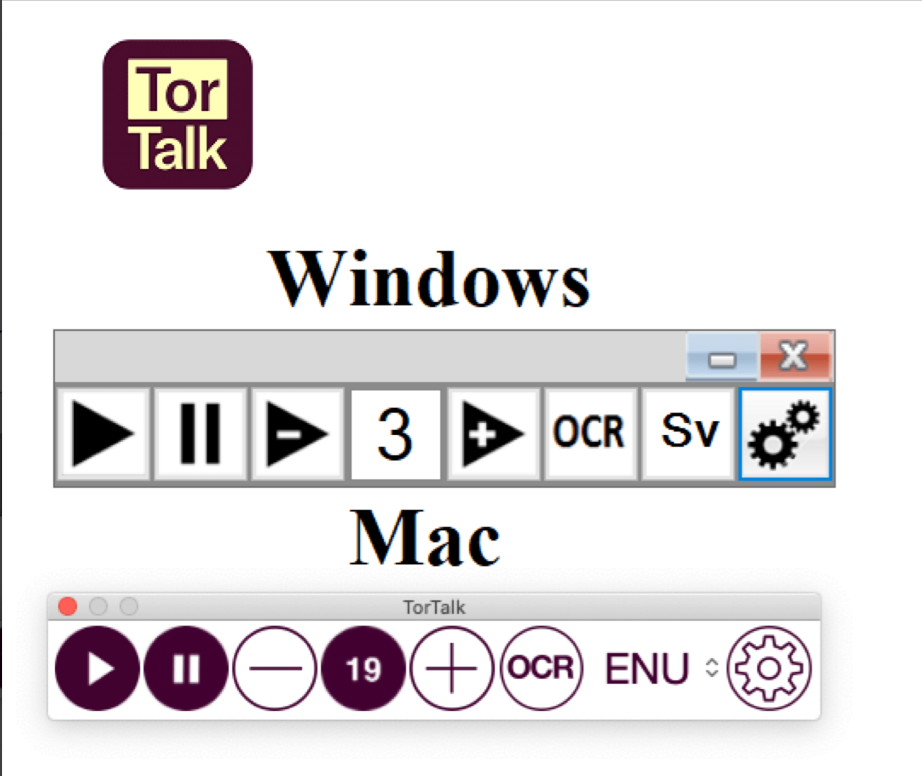
In addition, spell-checks became better, and I could somehow rely on them. Tentatively, in the beginning, because it could not recognize anything but spelling, it still could not help me choose between “I passed by” and “I passed bye.” This led to funny situations like me emailing someone, “I need participants for an excrement” instead of “I need participants for an experiment.” Before the Microsoft 365 suite, I used a bewildering combination of tools: one program for spell-checks, one for text-to-speech my text, and a third to text-to-speech PDFs. Now I use Microsoft Word for everything: reading, writing, and editing my text (yes, I am aware it sounds like an advertisement!). Universities in Sweden also provide access to a text-to-speech tool called TorTalk, regardless of disability status, and it can read Swedish and English, among other languages. Finally, I became aware of Legimus app through the library when I finished my master's studies. I did not use it much; reading a book for leisure should not be at the computer, I thought. I used the computer to study and read scientific articles, using it for reading something felt like I was studying, not that I was relaxing. When I had my first tablet, I started using it to read books with Legimus app. It felt more natural to sit on a plane, have the tablet somewhere, and follow the text in the physical book while listening to it.

An epiphany I had was with a technology called C-Pen. I asked my employer to invest in it: it was cheap, and I planned to use it for books I needed for work that were not digitized or that I could not text-to-speech for Intellectual Property reasons. The C-pen is a small handheld scanner that connects to your phone via Bluetooth. Then, everything you scan is transferred to your phone and read simultaneously (note that it works best with Apple products rather than Android). This little piece of technology made me love reading. I did not need to have a screen in front of me! I took a book and went to a cafe to read it! Mind-blowing! Regardless of whether I could use text-to-speech before, it was only then that I realized how much energy and time it took me just to read one page. With C-Pen, my reading speed increased tenfold, and my brain, after reading, was fresh and ready for the next activity!
I do not forget Legimus as a teacher. I used it to speed-listen to textbooks while multitasking. Every semester, I need to refresh my memory on the textbooks I teach. I do so by using Legimus, often listening while going through the book so I can take notes or place bookmarks to bring up the specific page in the class, or just to speed-listen to the chapters I need to prepare for the next class. I have no idea how I would have done this without Legimus. Maybe I would have written some concepts down the first time I read the book and then never opened it again. Potentially, discussing always the same things with the students and feeling uncomfortable if they mentioned a concept I did not remember, or I had not written down.
I know not everyone is good with technology, and to be honest, I have no idea if it was difficult. I only knew it was easier than reading, so it was worth the effort for me. Nowadays, I need to read a lot, and quite often I need to peer review. This means that I need to have brain power for critical thinking after reading. I could not do so with conventional reading.
Diversity is not inclusion*
Today, I have a loving partner and a loving dog, I live in Sweden, and I try to learn to speak the language comfortably. I do perceive dyslexia as my identity, but I do not let it define me; every dyslexic is different, dyslexia is experienced differently by different people, and every person has multiple identities. We all have a combination of health conditions and personalities in addition to unique experiences. Diversity is what makes most species survive. However, being in an environment that allows diversity does not necessarily mean that it facilitates access and inclusion. This should be taken into consideration by people and policymakers. Diversity may increase awareness and acceptance, but it does not ensure being allowed to join and contribute. This is why laws like the European Accessibility Act are needed to force service providers to facilitate access to essential services. However, we still have a long way to go before we reach inclusion, where one has the power to be heard, contribute, and influence regardless of their abilities.
I do not know how we will achieve that as a society, but we can start by experiencing, understanding, and sympathizing with the “other”. For example, people with different abilities, genders, religions, cultures, professions, etc. Most importantly, by understanding that even if we live through the same things, we may experience them differently. Maybe then, we can become mature enough to understand that nature is complex, a gradient. However, our brains are incapable of comprehending a reality that does not fit into boxes. If we recognize that these boxes have spaces between them, we may become aware of the things, concepts, or even people who fall in between. People who, to access society, may need different support than that offered to the lucky ones who fit in one or two boxes.
In my line of work - technological design - reflections on what and how we design, as well as the potential impact of what we design, are key. I am aware that the technology I design supports some people who may fit in some boxes to have access to digital services, while others may not be able to use it. This is power; the “designers” have the power to facilitate access. All of us are designers at different levels of society. Some design technology, systems, laws, policies, and some may just design in smaller ways, for example, our way of working or interacting with others. Often, we fail and unwittingly harm others, but we should always think: what did I ‘design’ today to facilitate inclusion in…my life, society, employment, politics, etc., and what can I improve tomorrow?
*Inclusion over Diversity by Kenyona Matthews at TEDxAkron https://www.youtube.com/watch?v=V_v9Nd6TYt0


